Dr Rob Johnson has written the below essay responding to the recent events in USA and Veneuala.
The Strategic Shift
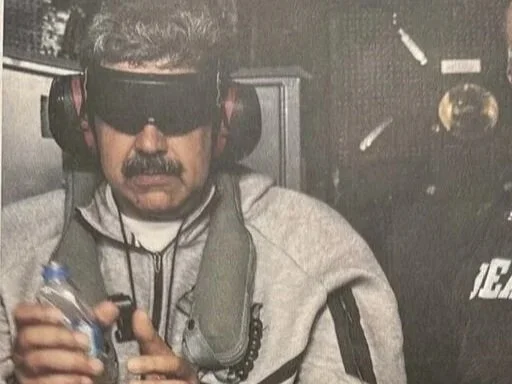
The American operation into Venezuela represents a shift in international affairs that has been years in the making. The Trump administration has stated its priority is the interests of ‘America first’. It is eager to assert its influence over the Western hemisphere, with its aspiration to control Greenland and Canada, rename the Caribbean region as the Gulf of America, and terminate regional narcotics trafficking. The removal of a dictator, who had presided over sham elections and orchestrated a regime of intimidation, opens up the possibility of a new political dispensation in Venezuela and the development of a decayed oil industry over the next 30 years.
Some European commentators have asserted that China will be emboldened to conduct a similar coup de main against Taiwan and that Russia will opportunistically follow suit. Neither of these assertions has any basis in evidence. China is already coercive against Taiwan and countries of Southeast Asia, while Russia is engaged in war of aggression against Ukraine. Their agendas were already in place.
Instead, we can now see that a long-term shift is underway. The UN has been criticised for being unable to uphold international norms. It has been reduced to a forum for diplomacy or ‘statements’, but the impasse in the UNSC has prevailed for some time. Three of the five permanent members of the Security Council, Russia, China, and the United States, have been in breach of the principles of the UN Charter periodically over the last two decades. Even the UK now finds itself in breach of the UN principle of self-determination with regard to the people of the Chagos Islands.
America’s recent action indicates that it can act without restraint and impose its domestic legal system into international relations. This is not unique. China believes its own security laws apply to its nationals overseas and unilaterally abrogated its agreement with the United Kingdom by imposing its National Security Law in Hong Kong. Russia pursues its critics and dissenters by assassination in other countries, including the UK, exemplified in two high profile cases: the murder of Alexander Litvinenko and the attempted murder of Sergei Skripal that led to the death of an innocent British woman, Dawn Sturgess. Iran has for years pursued its opponents across the world and applies its own version of Sharia law and fatwas against its critics. While framed as lawful, this is the law of the jungle.
Taken together, these conditions indicate the post-1945 ‘rules-based order’ is over. The era of coercion is back.
The situation is not entirely negative from a Western point of view. Russia's economy is in crisis as the longer term effects of sanctions and war take their toll. Its armed forces have been unable to defeat a smaller adversary, and their small if incremental progress has come at enormous cost. China has been unable to prevent Taiwan remaining a democracy with a vibrant supply of advanced semiconductors for the world market, despite its efforts at intimidation such as the large scale rehearsal of a blockade it labelled, ironically, the ‘Justice Mission’. Russia's allies have failed: Syria is broken, Libya is a failed state, Yemen is isolated, and Iran is in political crisis induced in part by the collapse of the rial currency and a water shortage but also as a result of decades of mismanagement. Collectively, the Western powers are the wealthiest of the world and NATO has been enlarged to 32 members with a determination to modernise and enhance their armed forces.
What are the strategic implications?
First, we are seeing the assertion of national interest by hard power and by economic and informational means as the primary instrument of international relations.
Second, the risks of major war between the most significant states have increased. The results would be catastrophic. It is therefore more likely that international leaders will continue to seek opportunities, alternatives, and strategic advantages by other means. Primarily this will be through economic statecraft, such as trade wars and sanctions. However, we cannot rule out the ambitions of the most prominent leaders and therefore a significant armed conflict, which reaches across the globe, cannot now be ruled out.
What models of international rivalry can we use in our interpretation? To some extent, this is a Cold War in a new form. There are, as before, rival ideologies, conventional military confrontation, and the displacement of armed conflict through proxies in less developed countries and the Middle East. While greater economic interdependence exists currently, there is no reason why this will continue and decoupling appears to be more likely over the coming years. The other historical analogies of international confrontation on this scale include the 18th-century, the period between 1870 and 1914, and perhaps the interwar years of the 1930s. It has been pointed out that each of these eras of intense competition led to global war, but they were pre-nuclear age confrontations. In the Cold War, the single most significant conflict that involved the superpowers and their allies was the Korean War (1950 – 1953) and here the use of nuclear weapons was contemplated. Nevertheless, nuclear weapons were not employed throughout the Cold war, despite crises. Limited conventional wars, like the one in Ukraine, seem more likely.
More usefully, we may take a thematic approach and interrogate the causes of war. These appear not to have changed at all. States resort to war for reasons of reputation, the defence of vital interests, fear, survival, uncertainty, bellicosity, perceived injustices, domestic pressures, to resist an incursion, or because there is a sense of time running out. An examination of the indicators of approaching armed conflict, both log term and short term, shows that Russia and China have crossed the threshold for conflict. The warning signs are very clear indeed.
The emergence of the most powerful multipolar regions of the United States, the European region, and China tends to overshadow a number of conflicts and fracture lines across the globe. One such meridian of war can be traced through northern Nigeria, the Democratic Republic of Congo, Sudan, and Yemen. Ethnic and religious divisions have been exacerbated by misgovernment, corruption, the ambition to control precious resources, atrocities, and power struggles between factions. The antagonism between the violent terrorist movements of Hamas and Hezbollah, against Israel, continues, with periodic fighting. Other militias and terror groups in Iraq are supported by Iran, but the frequency of internal unrest has impaired Tehran’s ability to project power, and its ’12-Day War’ with Israel culminated in long range missile and drone strikes and then the destruction of its nuclear programme.
It is impossible to give an accurate forecast under these circumstances. What can be said is that medium and small powers will need to form coalitions for collective defence, create defences that are robust and which could inflict significant costs on stronger states so as to rebalance their cost-benefit calculations, and generate resilient, cohesive internal defences to combat disinformation and attacks on infrastructure. These are now essential, vital, and urgent requirements.
Rob Johnson, January 2026